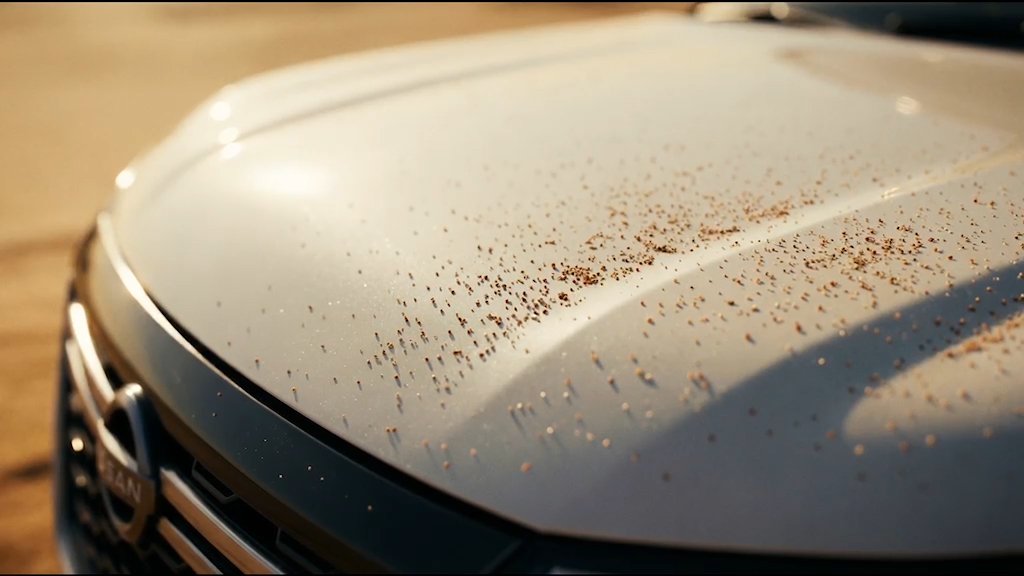
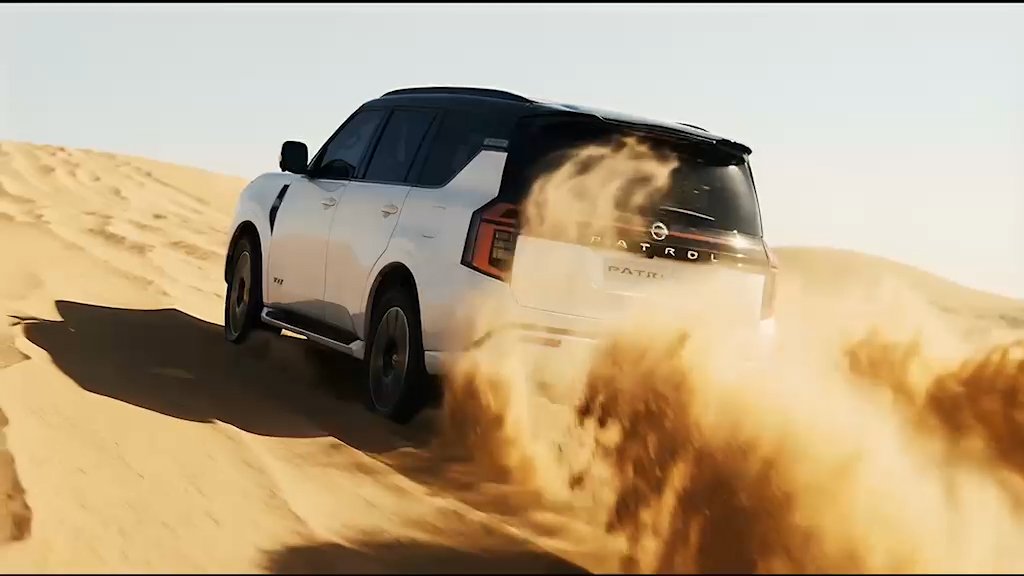
The Nissan Patrol has long represented capability, presence, and adventure. We wanted to explore what happens when a vehicle of this scale is paired with an entirely new filmmaking workflow one where artificial intelligence isn't used as a shortcut, but as a production tool.
Rather than recreating traditional car advertising, we set out to build a cinematic commercial that felt indistinguishable from a live-action production while being developed almost entirely through AI-driven workflows. The result was a spec film that combines realistic environments, physically believable vehicle motion, and premium automotive cinematography.
Building a believable world.
Every frame was designed around one simple principle: REALISM.
Instead of relying on surreal AI aesthetics, we focused on the subtle imperfections that make automotive commercials feel authentic natural lighting, accurate reflections, lens behavior, camera movement, environmental interaction, and consistent vehicle proportions.
The dramatic deserts and all of it’s trails, each location was designed to feel photographed rather than generated.
The challenge wasn't creating beautiful images.
It was convincing the viewer they were watching a real production.
Directing with AI
Creating cinematic realism required treating AI like a production department instead of a single tool.
The film was developed through a multi-stage pipeline including concept development, storyboarding, shot design, vehicle consistency, image generation, motion generation, continuity refinement, compositing, and finishing.
Every sequence was iterated multiple times to maintain visual continuity between shots while preserving the Patrol's identity throughout the commercial.
Instead of allowing AI to dictate the visuals, every shot was art directed with the same intention as a traditional commercial production.
Automotive cinematography without a camera
Car commercials are defined by movement.
To recreate that language, we studied the pacing, framing, and camera systems commonly found in premium automotive advertising from low tracking shots and drone perspectives to high-speed telephoto compression and dynamic close-ups.
The objective wasn't to imitate AI aesthetics.
It was to recreate the visual language audiences already associate with world-class automotive filmmaking
Human direction. AI execution.
While the visuals were AI generated, the creative decisions remained entirely human.
Every scene, camera angle, lighting setup, transition, and edit was carefully designed before production began.
The technology accelerated execution, but storytelling, pacing, and cinematic intent remained at the center of the process.
This approach allows brands to prototype ambitious campaigns, visualize impossible productions, and create premium advertising with a radically faster production timeline.
Expanding what's possible
The Nissan Patrol spec commercial serves as a proof of concept for a new production model—one where AI expands creative possibilities rather than replacing filmmaking.
For Twelfth Origin, this project represents more than an experiment.
It demonstrates how AI can be integrated into professional commercial production while maintaining the craft, precision, and visual standards expected from premium automotive advertising.